Native American Indians
As a child I spent numerous hours hiking with my family in the mountains of Southern Utah looking for Indian Petroglyphs, arrow heads and pottery. My Father had a deep love for the Indian culture which was manafested in his art. In the process of finding ideas to use in his art, he took numerous pictures of petroglyphs in southern Utah. A number of these rock drawings have since been destroyed due to new housing developments, vandelism, and weather erosion. This section of ScienceViews is dedicated to my father Max Hamilton.
The First Americans
Man in the AmericasPre-Clovis Arcaeological Sites
The Mound Builders
|
Introduction to 'The Mound Builders'
This excellent introduction to the Mound Builders was written by J. P. MacLean in 1879. | |
|
The Lost Civilizations of North America
This section is dedicated to one of the greatest tragedies in American archeology — the wanton destruction and neglect of some of the most important Native American archeological treasures. |
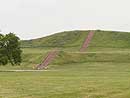 |
Cahokia Mounds, Illinois
Cahokia Mounds State Historic Site, in Collinsville, Illinois, is located on the Mississippi River floodplain, across from St. Louis, Missouri. This site was first inhabited by Indians of the Late Woodland culture about AD 700. |
 |
Flint Ridge State Memorial, Ohio
For more than 10,000 years, Flint Ridge was one of the most important flint quarries in eastern North America. |
 |
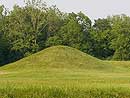
Fort Hill, Ohio
Fort Hill is a Native American fortification built by the Hopewell Indians nearly 2,000 years ago, and is one of the best preserved Indian structures in North America. |
 |
Hopewell Culture Center, Ohio
Mounds and earthworks along the Scioto River, doubtless the work of many human hands, make us wonder. Who made them? How long have they stood? What role did they play in the lives of their builders? |
 |
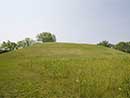
Newark Earthworks, Ohio
The Newark Earthworks were built by the Hopewell culture between 100 BC and 500 AD and was one of the architectural wonders of ancient America with the largest set of geometric earthen enclosures in the world. |
 |
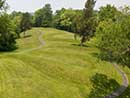
Seip Mound, Ohio
Seip Mound is the second largest earthen mound built by the Native American Hopewell people. The mound is 240 feet long, 130 feet wide, and 30 feet high. |
 |
Serpent Mound, Ohio
This quarter mile long earthworks looks like a gigantic serpent in the act of uncoiling. |
 |
Story Mound, Ohio
Story Mound is a large, round earthen Adena mound located in Chillicothe, Ohio. |
Indians of the South West
 |
Bandelier National Monument, New Mexico
In this secion, discover Bandelier's Ancestral Inhabitants, the Frijoles Canyon Village, the Frijoles Canyon Petroglyphs, Tsankawi Village, Tsankawi Cave Dwellings, Tsankawi Petroglyphs, and the Painted Cave Petroglyphs. |
 |
Calf Creek Indians, Utah
The beautiful Calf Creek canyons were once inhabited by ancient American Indians. Today their presence and influence still remain in the form of ancient dwellings, storage structures (graineries), and hugh life size pictographs. |
 |
Chaco Culture National Historical Park, New Mexico
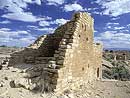
For all the wild beauty of Chaco Canyon's high desert landscape, its long winters, short growing seasons, and marginal rainfall create an unlikely place for a major center of ancestral Puebloan culture to take root and flourish. Yet this valley was the center of a thriving culture a thousand years ago. |
 |
Hovenweep National Monument, Utah-Colorado
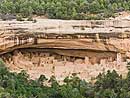
The towers of Hovenweep were built by ancestral Puebloans, a sedentary farming culture that occupied the Four Corners area from about A.D. 500 to A.D. 1300. Similarities in architecture, masonry and pottery styles indicate that the inhabitants of Hovenweep were closely associated with groups living at Mesa Verde and other nearby sites. |
 |
Mesa Verde, Colorado
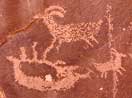
About 1,400 years ago, long before Europeans explored North America, a group of people living in the Four Corners region chose Mesa Verde for their home. For more than 700 years they and their descendants lived and flourished here, eventually building elaborate stone communities in the sheltered alcoves of the canyon walls. |
 |
Moab Area Rock Art, Utah
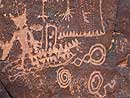
The Moab area has numerous examples of Indian rock art to enjoy. |
 |
Parowan Gap Petroglyphs, Utah
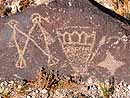
The Freemont Indians that lived close to the Parowan Gap were fascinated with numbers and calendar seasons. They are unique from other rock art drawings in the area. Explore the Parowan Gap Petroglyphs, with its Caves, and Lunar Calendar. |
 |
Petroglyph National Monument, Arizona
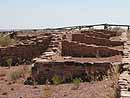
As you walk the trails of Petroglyph National Monument, it seems as if voices, from the rocks, speak to tell the story of people who lived long ago, who walked the same ground, and left their legacy in images carved upon the black basaltic rocks. |
 |
Puerco Pueblo, Petrified Forest, Arizona
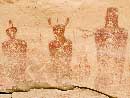
Not only is the Petrified Forest unique geologically, but it has a rich Native American culture manafested by the ruins at Puerco Pueblo. Numerous Petroglyphs cover the rocks with the greatest selection at Newspaper Rock. The Pueroc Puebloan Indians even had a Solar Calendar. |
 |
Sego Canyon Petroglyphs, Utah
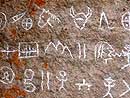
The sandstone cliffs of Sego Canyon are an outdoor art gallery and a holy place. Native Americans painted and chipped their religious visions, clan symbols, and records of events onto the cliffs. |
 |
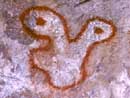
Unusual Petroglyphs East of Cedar City, Utah
These unusual petroglyphs are found east of Cedar City, Utah. They are unique from other petroglyphs in the area and may have had an early Spanish American influence. |
 |
Lion's Mouth Cave, Utah
The Lion's Mouth Cave is located west of Cedar City, Utah. |
Related Information
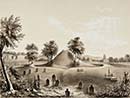 |
Ancient American Archaeology
This contains a large selection of some of the most important Ancient American e-books. |
|
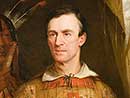
George Catlin
George Catlin was a painter and writer specializing in the artistic preservation of the natives of North America. He worked under the premonition that the North American Indians were a "dying race." As such, he took special care to document the Indians in their natural element. |
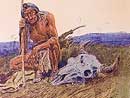 |
Indian Stories and Legends
This is a large e-book collection of stories and legends of the native American Indians. |
Copyright © 2003-2009 Calvin & Rosanna Hamilton. All rights reserved.